The short answer
Ramadan and the Eid holidays follow the moon, so their exact dates are confirmed only close to the time. During Ramadan the roads are quieter in the morning and busiest in the hour before iftar, and the airports are busy around Eid. Book ahead, especially for evening rides.
Dates that follow the moon
Ramadan is the ninth month of the Islamic calendar. It begins with the sighting of the new crescent moon and lasts 29 or 30 days, depending on the sighting of the next one. In the UAE, the start of the month follows an official announcement by the moon-sighting committee of the UAE Council for Fatwa, and the Eid holidays are set by the moon in the same way, so the exact dates are confirmed only close to the time. Because the Islamic year has about 354 days, Ramadan arrives about 11 days earlier each year in the Gregorian calendar: in 2026 it began in February and Eid Al Fitr fell in March, and in 2027 both come earlier again. No dates for 2027 have been officially announced yet, so treat any date you see as an estimate until the authorities confirm it, and keep plans around the start and the end of the month flexible.
How the day changes
During Ramadan, Muslims fast from dawn to sunset. The day is shaped by two meals: suhoor, eaten early in the morning before the fast begins, and iftar, which breaks the fast at sunset. Many people then go to Tarawih prayers in the mid-evening, after the Isha prayer. Cities become especially lively after sunset, and malls stay open until late at night. Non-Muslims are not required to fast, and visitors can enjoy the spirit of the month; restaurants and food courts in malls provide dining areas away from those who are fasting. For travel, the busy hours move: the working day starts later for many, the roads fill before iftar, and evenings run late. Keep in mind that many of the people around you, at work and on the road, are fasting through a long day.
Shorter working hours, announced each year
Working hours are shorter in Ramadan, and the details are announced every year. Under UAE labour law, private sector hours are reduced by two hours a day; in February 2026 the Ministry of Human Resources and Emiratisation confirmed the reduction for the month and let companies use flexible or remote work within the shorter day. The Federal Authority for Government Human Resources sets Ramadan hours for federal government entities by circular, and in 2026 they ran from 9 am to 2.30 pm, Monday to Thursday. Because many offices open later and close earlier, the usual morning and evening rush hours shift. Check the year’s announcements before you plan a day of meetings.
Quieter mornings, a busy hour before iftar
With the working day starting later, early mornings are often calmer than usual. Salik, Dubai’s toll operator, switches to a separate Ramadan timetable, adjusted, it says, to changes in travel patterns, with no early-morning peak. The busiest stretch is the hour before iftar, when people hurry home or to family to break the fast; for Ramadan 2026, the RTA moved its evening truck restrictions on Emirates Road an hour earlier. Police have long warned against speeding to make it to iftar, and the RTA asks drivers for patience during fasting hours. If you can, travel well before iftar or after it. If you are invited to an iftar, set the pickup so you arrive in good time rather than at the last minute. After iftar the city comes alive again, so evenings stay busy.
Book ahead, especially in the evening
The UAE government portal notes that taxis can be hard to find in the evenings of Ramadan, as many drivers are breaking their fast, and suggests booking in advance. A chauffeur booked ahead removes that uncertainty: you choose the time, see one fixed fare before you confirm, and get a message when your chauffeur is assigned, with a link to follow the car. Add a note if your chauffeur should know anything, such as the entrance of the house you are visiting. For an evening of visits, an iftar followed by family calls or a late suhoor, a chauffeur by the hour in Dubai or any emirate keeps the same car with you, waiting at each stop. Cancellation is free up to a set time before pickup, shown when you book, so you can book as soon as your plans are set.
Tolls and parking during Ramadan and the holidays
Toll and parking times change during the month. Salik’s Ramadan timetable applies in Dubai, and its gates are not free on public holidays: Salik says its variable tolling may apply on public holidays and major events, with timings announced closer to the dates. Hours of paid parking change during Ramadan too, and the government portal points to each emirate’s transport authority for the details. You don’t need to track any of this to ride with drivoo: Salik and Darb tolls and paid parking pass through at cost, with no markup, and each crossing is itemised on your receipt. Your quote shows an estimate of the tolls on your route, and our guide to Salik tolls explains how it works.
The Eid holidays
Both Eids follow the moon in the same way. Eid Al Fitr marks the end of Ramadan: the official holiday runs from 1 to 3 Shawwal, and if Ramadan lasts 30 days, the 30th day is a holiday too. Arafah Day, 9 Dhu Al Hijjah, is a public holiday, followed by Eid Al Adha from 10 to 12 Dhu Al Hijjah. Under Cabinet Resolution No. 27 of 2024, these holidays apply to the public and private sectors alike, and the exact days off are announced before each Eid. The RTA publishes its own holiday timings for the metro, buses and paid parking: over Eid Al Fitr 2026, for example, the metro ran until 1 am. If you are visiting family in another emirate over Eid, our intercity chauffeur rides are quoted door to door, with the cross-emirate surcharge inside the fixed fare.
Busy airports around Eid
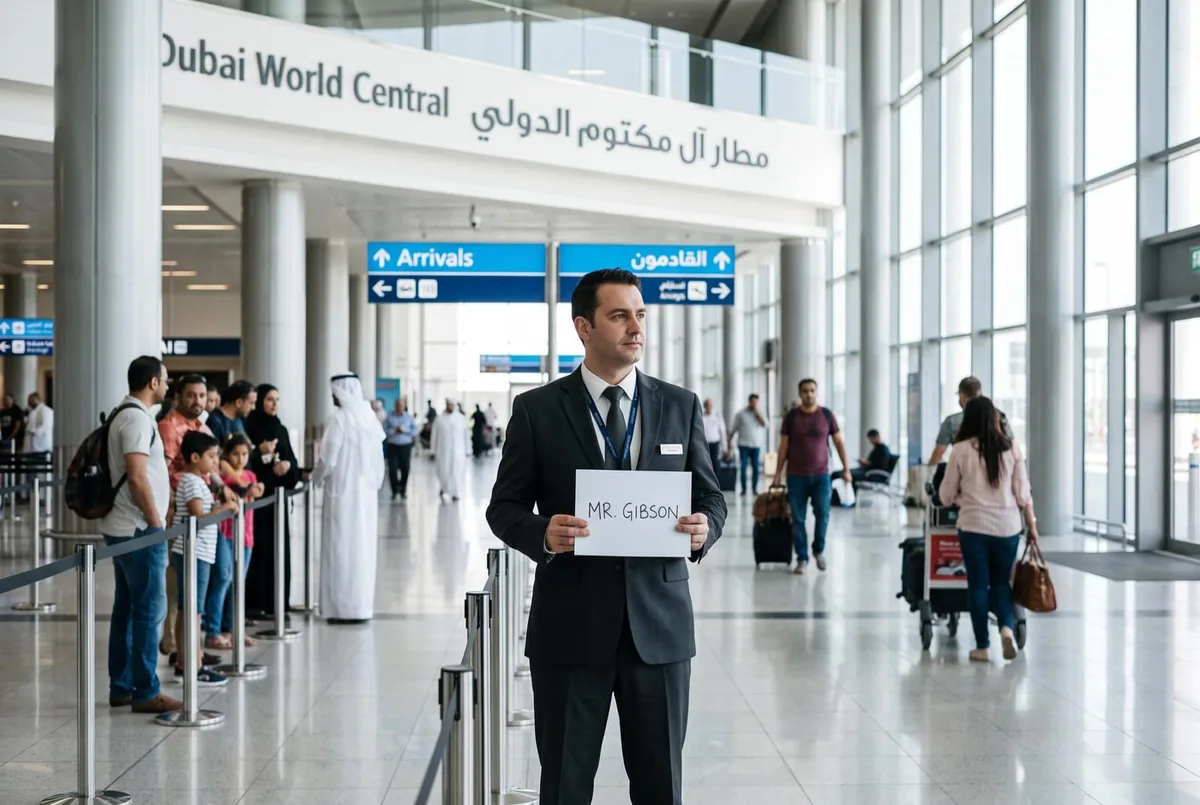
Eid brings travel peaks at the airports. For the Eid Al Fitr period in 2025, Dubai Airports expected more than 3.6 million guests at DXB between 26 March and 7 April, and Emirates warned of congestion around the Terminal 3 entrances, asking customers to build in extra time. For Eid Al Adha in 2026, Emirates asked passengers to arrive at least three hours before departure. If you are flying out, follow your airline’s advice and book an airport drop-off with your departure flight number: the booking warns you if the pickup would get you there later than check-in allows. If you are landing, book with your arrival flight number: your chauffeur follows the flight and times the pickup from its arrival, with free waiting time after landing. Without Meet & Greet, your chauffeur waits at the parking the airport sets aside for pre-booked cars, which the airport and the transport authorities move from time to time, so follow the signs. With Meet & Greet, added when you book where it is offered, your chauffeur waits inside the arrivals hall with a board showing your name. See our DXB terminal guide, and book Dubai Airport (DXB) transfers ahead.
A checklist for Ramadan and Eid
Watch for the official announcements: the start of Ramadan, the Eid holidays and the year’s working hours are confirmed by the authorities. Plan journeys away from the hour before iftar where you can, and allow extra time where you can’t. Book evening rides ahead, and book airport transfers as soon as your flights are set, with your flight numbers. Around Eid, follow your airline’s advice on when to reach the airport. If you are meeting a guest, add Meet & Greet where offered. For concerts and shows over the holidays, see our guide to event transport in Dubai. Every ride is run by a licensed limousine company and its licensed chauffeur, at one fixed fare, shown before you confirm. To plan your next arrival or departure, start with our airport transfers across the UAE.